Most business AI projects reach the same fork early: should the model look up your data when it answers, or learn from your data in advance? Retrieval-augmented generation (RAG) and fine-tuning solve different problems, and choosing well saves months of rework.
When RAG is the right fit
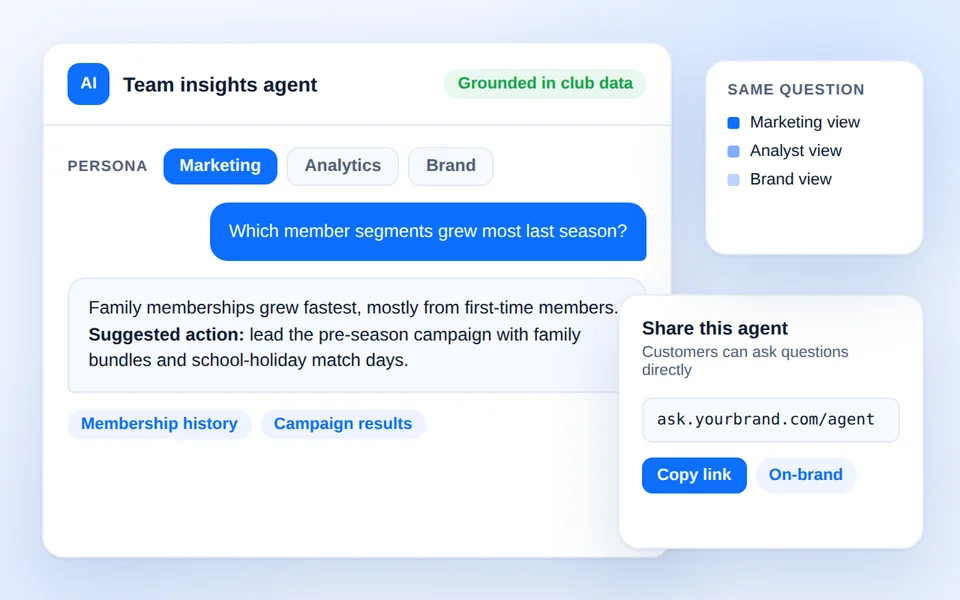
RAG keeps your knowledge outside the model. At question time, the system retrieves the most relevant passages from your documents or databases and passes them to the model, so answers stay grounded in current sources you can check.
- Your content changes often, such as policies, product data or reports
- Answers need to point back to a source
- Different users should see different data, enforced by access controls
When fine-tuning is the right fit
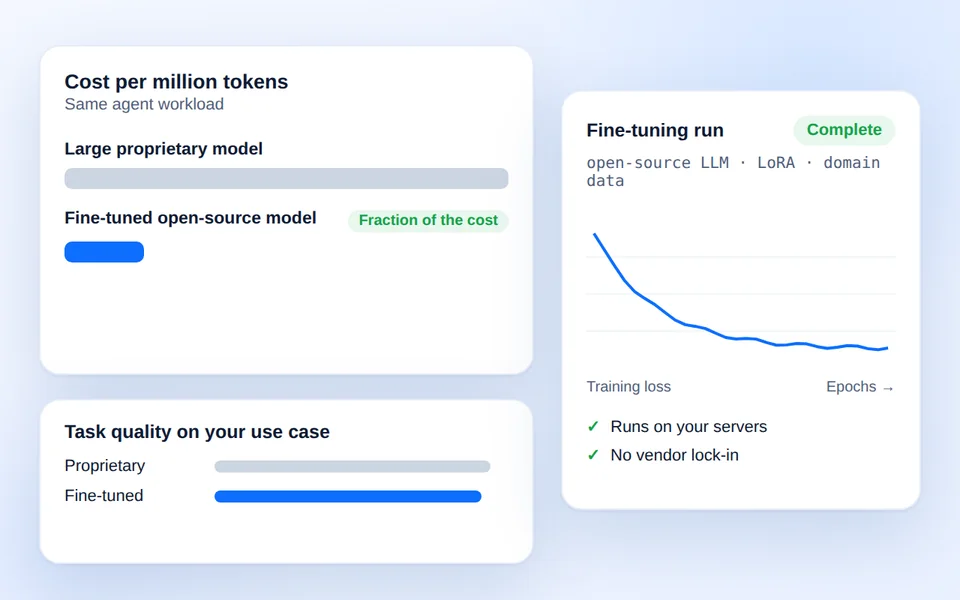
Fine-tuning adapts a model's behavior using examples from your domain. It works best when you need a consistent format, tone or task-specific skill, or when a smaller open-source model can take over a narrow job from a large proprietary one at a fraction of the cost.
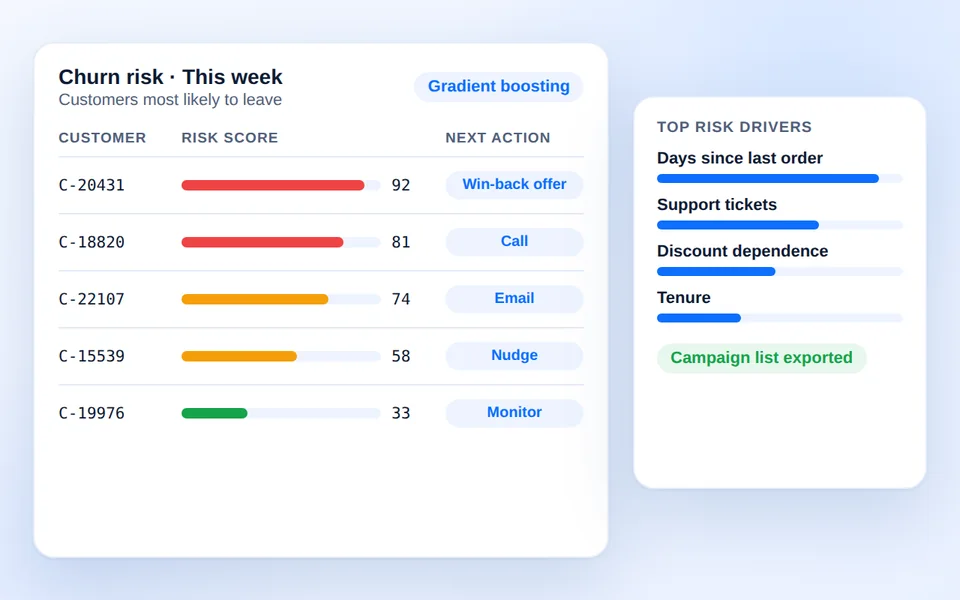
- A repeated, well-defined task such as classification or extraction
- A consistent output style or structure
- Lower cost per request, or running the model on your own infrastructure
Often, the answer is both
Many production systems combine the two: a fine-tuned model that follows your formats reliably, grounded by retrieval over your latest data. Start from the business question, measure answer quality on real examples, and add complexity only when the results show it helps.
This is the thinking behind our RAG-based agentic AI systems and our work fine-tuning open-source models. See Our Work for these use cases.